Generative AI’s Economic Surge: A Trillion-Dollar Promise Meets the Realities of Investment Frenzy and Risk

Imagine a world where machines whisper the solution to your toughest problems before you've even asked. They write your reports, sketch your designs, debug your code and create responses that mimic human nuance. That future is here, powered by generative AI, and the economic fascination around it is nothing short of electric. Economists talk in trillions. Investors act with brash confidence. But lurking beneath these headlines is a nervous whisper: hey, what if this wave of investment isn't underpinned by grounded economic value, but rather speculative momentum that could slip away?
As we wade into this generative AI era, three powerful narratives weave together. First is the sheer scale of economy-wide productivity potential. Second is the stampede of capital feeding the infrastructure and startups and helping to shape the engine of transformation. Third is a growing unease that returns may not measure up to expectations, and there are echoes of previous tech bubbles. Understanding the interweaving of these threads is critical to determining not only investment or business strategy, but the economic destiny itself.
A Surge in Economic Promise Unfolding
 Generative AI's ability to create coherent text, convincing visuals, and functional code isn't just cool, it is at the core of knowledge work. Now it is used by professionals for writing, editing, summarising, code completion, etc. In areas such as customer support, consulting and software development, productivity gains of five to twenty-five percent have already been documented. What used to take hours to complete is now taking mere minutes, so more space can be opened up for creative or complex activities.
Modelling such improvements shows truly staggering upside. A 2025 brief by the Penn Wharton Budget Model, using task-based models, projects that generative AI could add about 1.5% to productivity and GDP by 2035, with long-term totals reaching almost 3-4%. That's not trivial, it's a permanent change in the economic arc, spurred by automation, innovation and sectoral change. A decade of compounding like that adds up to a quietly monumental gain.
Other estimates paint an even more colourful picture. Bankers at Goldman Sachs make the case for a seven-percent increase in global GDP. McKinsey suggests generative AI may open up between two and four trillion dollars in revenue a year across core business functions. Furthermore, when this is layered into software assistants and automation systems, that number may reach as much as eight trillion dollars. In essence, AI's economic footprint could be on the scale of the GDP of entire leading economies.
In corporate case studies, productivity gains mean profits. In Japan, early adopters of AI saw total factor productivity improvements of more than two percent , all thanks to improved cost efficiency, faster innovation and revenue expansion. Developer tools such as GitHub Copilot have demonstrated that close to a third of suggested code can be accepted and used, suggesting worldwide productivity upside of more than a trillion dollars by 2030.
These promising signs are exciting enough but their urgency is underscored by the current economic backdrop. With global growth slowing and public budgets strained under the pressures of demographics and climate, gains in productivity remain one of the few policy levers left for sustained progress. Generative AI isn't being sold as a tech novelty, but as an economic lifeline: one that can reinvigorate labour markets, fiscal space and future prosperity.
The Investment Boom Building the AI Engine
Where promise goes, capital often follows, and in the generative AI space, behaviour looks a lot more like a surge than a trickle. Private investment in AI spiked to almost $34 billion in 2024 alone, which is a rise of about twenty percent in just a year. Public companies doubled down as well, driving demand for data centres, specialised processors, and power grids needed to operate them. In the U.S., capital spending on data centres is now running into hundreds of billions each year, and that's fueling critical AI infrastructure.
Analysts estimate that investment in data centres alone has the potential to boost U.S. GDP by ten to  twenty basis points in 2025 and 2026: enabled by construction, cloud infrastructure and energy demand. In many ways, this boom is working as a private-sector stimulus package at just the right moment as archaeological and economic engines are sputtering.
Tech giants have led the charge. Their infrastructure roll-outs, server farms, and hyperscale deployment reflects faith in AI's central role in the digital economy's next frontier. Cloud capital expenditures are expected to exceed $400 billion in 2025, but growth rates may calm down in 2026. The expectation is obvious, build-big-now to get the edge.
Venture investment follows suit as startups infused with generative artificial intelligence powers are now attracting historic valuations and funding. Confidence runs high, to the point of some leaders warning of overheating.
A Surge of Caution: Where the Bubble Talk Begins
With such seismic investments come fears of a mismatch between hype and hard results. One study from MIT is especially sobering. It found that at least ninety-five percent of generative AI projects adopted by businesses failed to produce meaningful financial outcomes. Tens of billions in funding later, a majority of company leaders couldn't cite tangible gains in productivity or revenue from their bets on AI. The drivers for these failures: poorly integrated systems, unrealistic expectations, lack of organisational readiness.
Broader industry studies reflect these concerns. Many executives end up looking at little bottom line impact from AI projects, even as budgets swell. The technology is real but adoption strategies often do not have alignment with core value drivers. Without structural organisational, cultural and managerial change, promises can remain intangible.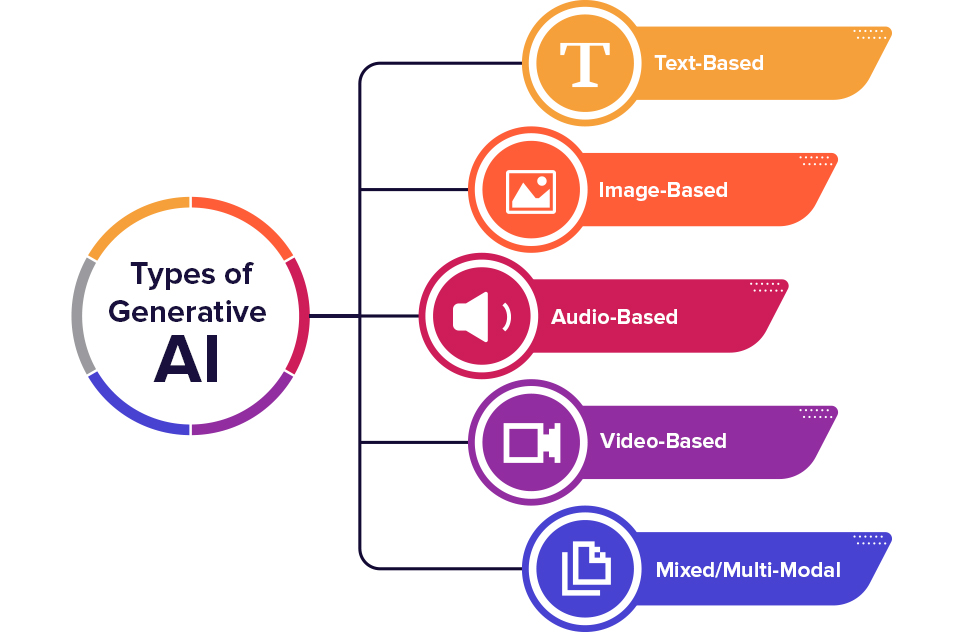
The financial ramifications are serious. Analysts warn that if capital expenditure on AI infrastructure slows, especially in 2026 as depreciation costs bite, corporate revenue growth could slow as much as thirty percent. Market valuations of AI-centric firms could deflate quickly if growth doesn't follow building. Comparisons of the current dynamics to previous bubbles, the dot-com era in particular, are drawn by experts who shaped their comparisons by the fact that investment was outpacing business fundamentals.
Voices from the field inject an urgent tone to these warnings. OpenAI's CEO has been vocal about investor hype that recalls tech bubbles. Hedge funds that follow chipmakers such as Nvidia have warned that valuations seem over-inflated. A former central bank economist moved retirement funds into cash, citing investment in AI overheated markets. As a result, risk signals like failed IPOs, investor caution, and rising scepticism are mounting.
Taken together, these cautionary markers mean that while AI promises are exciting, investors and executives need to be careful not to become seduced by illusions and investment must be grounded in outcomes, not in optimism.
Aligning Promise, Investment, and Prudence
So what is in between hope and hype? The answer is probably discipline and alignment. Generative AI is one of the biggest tools yet for productivity but its power to reshape economies will only be realised through investments that bridge the gap between real operational gains.
At a strategic level, businesses have to link AI initiatives with measurable metrics: revenue lift, cost savings, time saved, or customer impact. Pilots require real KPIs and some willingness to pivot. Infrastructure investment is to be paced, with clear scale-up thresholds based on ROI.
For economies, especially those not on the technology frontier, there remains opportunity. For instance, focused AI implementation in public service, education, health care or financial inclusion could produce disproportionate social and economic return to effort. And investments don't have to match the billions of megacities; even smaller-scale, domain-specific interventions can provide significant productivity gains if there is high leverage.
Public policy can tip the balance as well. Support for AI literacy and capacity building, infrastructure investment for underserved regions, regulation that protects inclusion and transparency, and fiscal instruments that ensure incentives are aligned can ensure generative AI is a force multiplier, not some speculative fad.
Ethical and environmental frameworks are important, too. Energy consumption in big data centres is not so trivial. Political focus on AI without attention to carbon, equity, bias or governance risks missing the mark. Thoughtful frameworks, regulation and transparency must accompany large investments.
Imagining an AI-Powered Economic Future: Balanced and Grounded
Generative AI has the potential to be the next electrification, the next internet: a ubiquitous catalyst for economic renewal. But promise isn't enough to make nations richer or businesses more profitable. To see the trillion-dollar gains, there is a need for alignment: between investment and capability, between strategy and implementation, between ambition and accountability.
This doesn't mean infrastructure that delivers the bragging rights of tech, but infrastructure that delivers productivity. It means projects based on change, not novelty. It means investors who seek durable results, as opposed to flashy valuations. It means policy that fuels innovation as well as hedges against speculative excess.
Zoom out, and you see the stakes. Economies that get this balance right may unleash a generational leap in productivity and value creation. Those that chase surface excitement without grounding, may find themselves holding on to infrastructure without a return in sight. Generative AI is an economic frontier, its promise is immense, but only if we tread the paths with care, strategy, and fidelity to actual results.